
10/2025
Design and Material: Faucets with Natural Stone Handles
Malachite, lapis lazuli, statuary marble, and Portoro black marble: symbols of style for the Vita and Pepe collections in the M Style variants
Natural stones have accompanied the history of architecture and art throughout every era: from Egyptian malachite amulets to Renaissance frescoes tinted with lapis lazuli powder, from Michelangelo’s sculptures carved in Carrara statuary marble to Baroque decorations enriched with Ligurian Portoro. It is said that Cleopatra wore malachite as a protective stone, and that medieval artisans ground lapis lazuli to obtain the most precious blue pigment of their time.
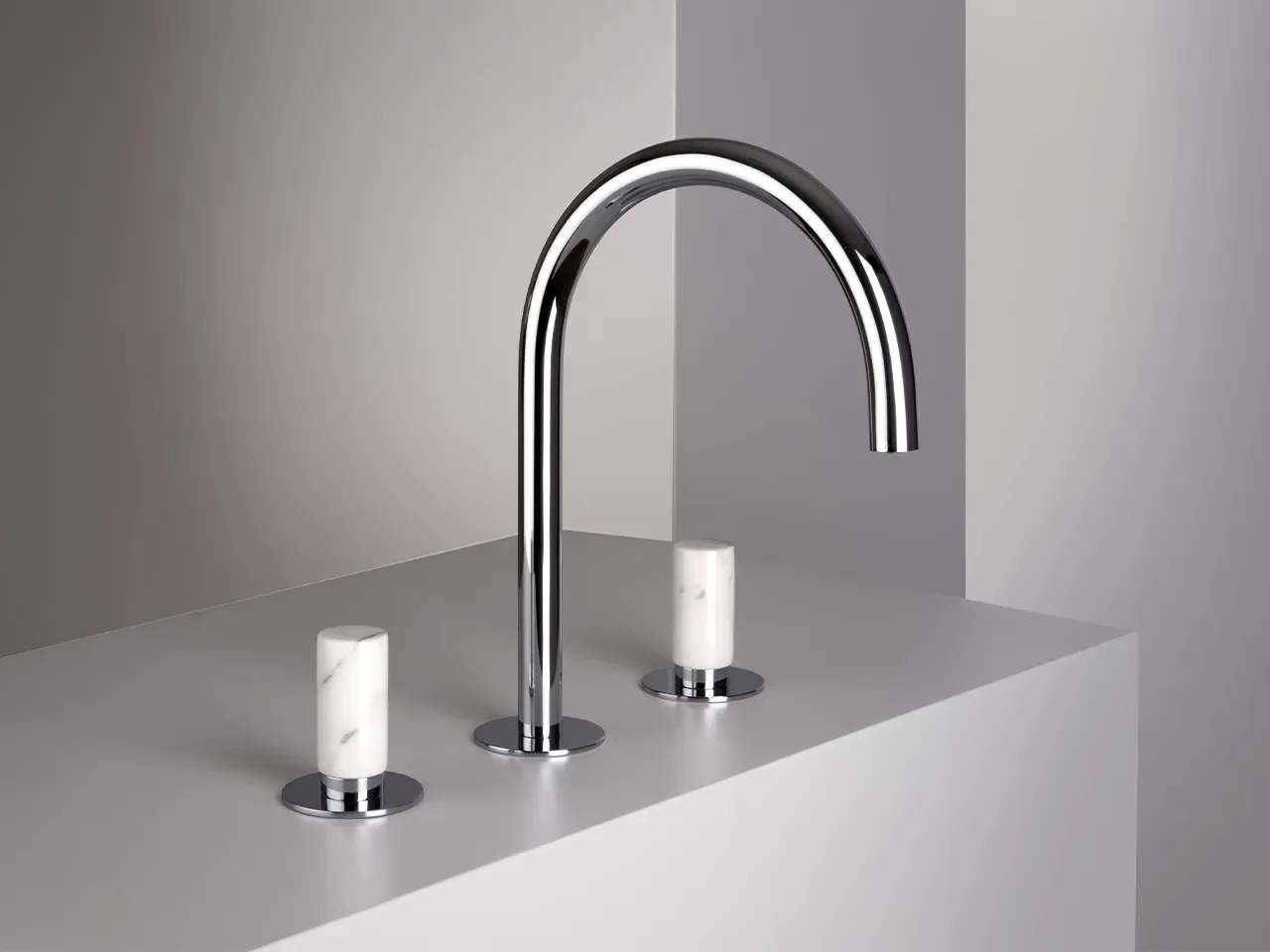
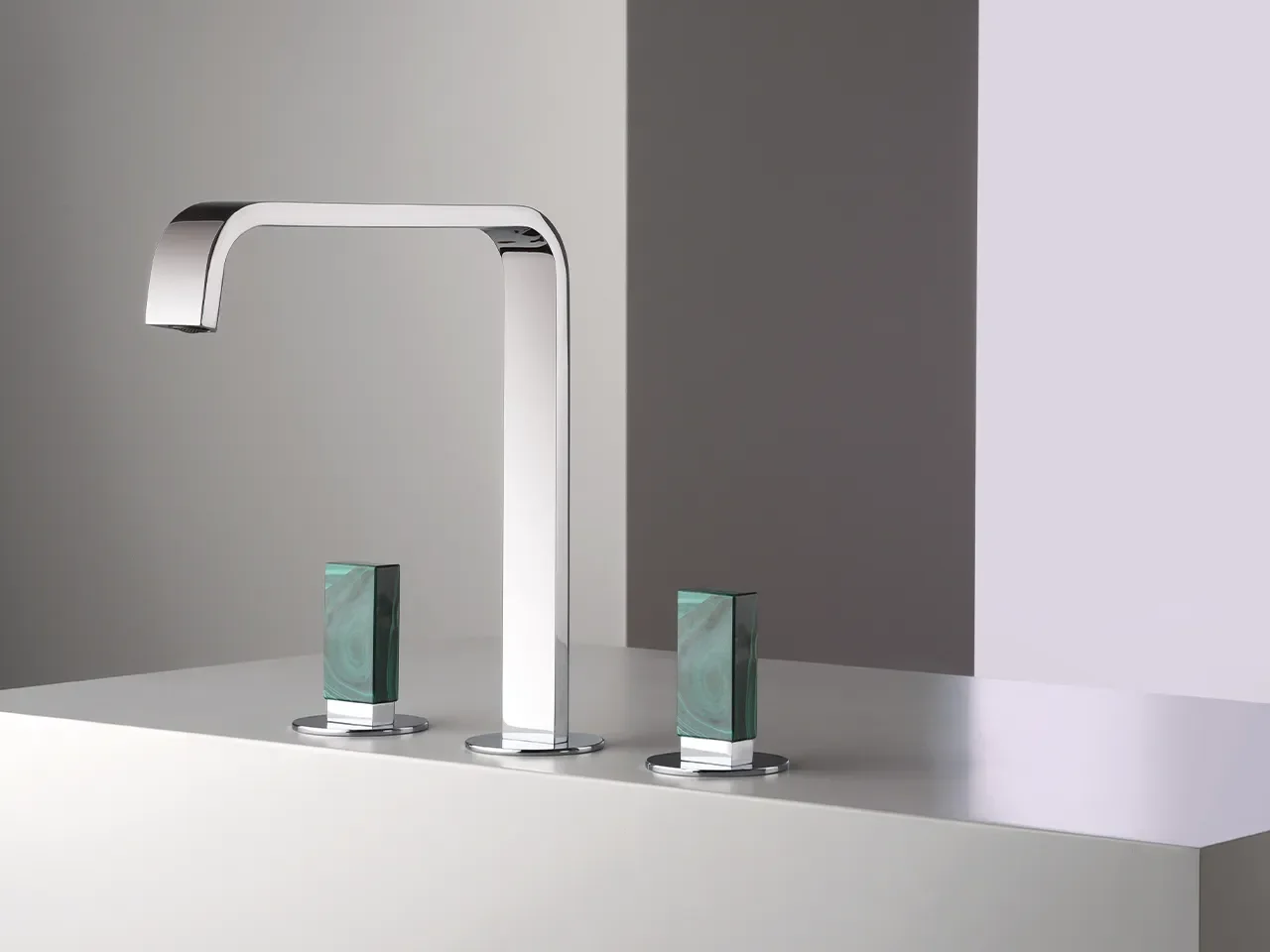
That timeless allure now enters the contemporary bathroom. Among Frattini’s collections, Vita M Style and Pepe M Style stand out — two variants featuring natural stone handles: a material and symbolic heritage transformed into a daily design gesture.
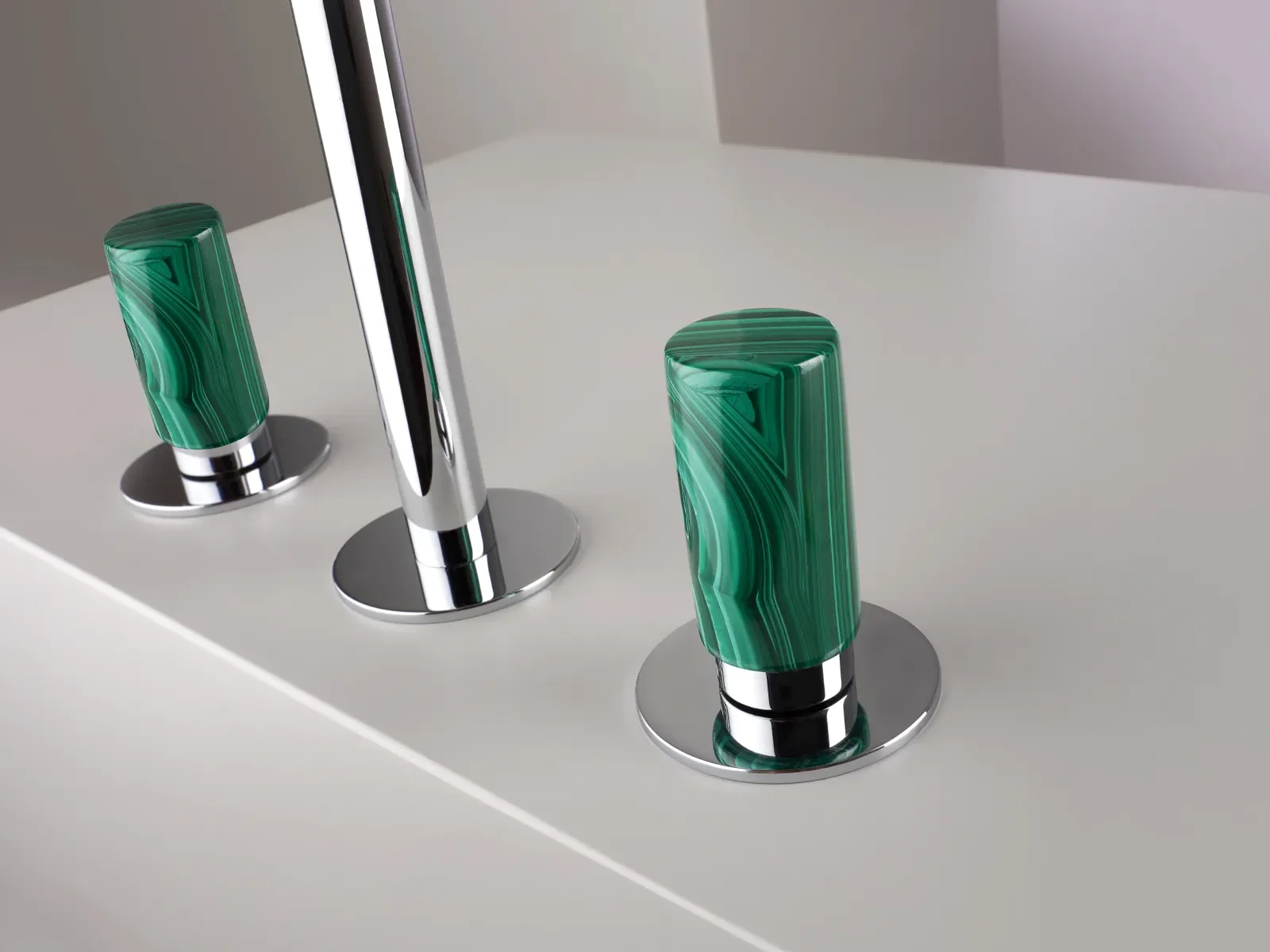
Two Collections, Two Geometries
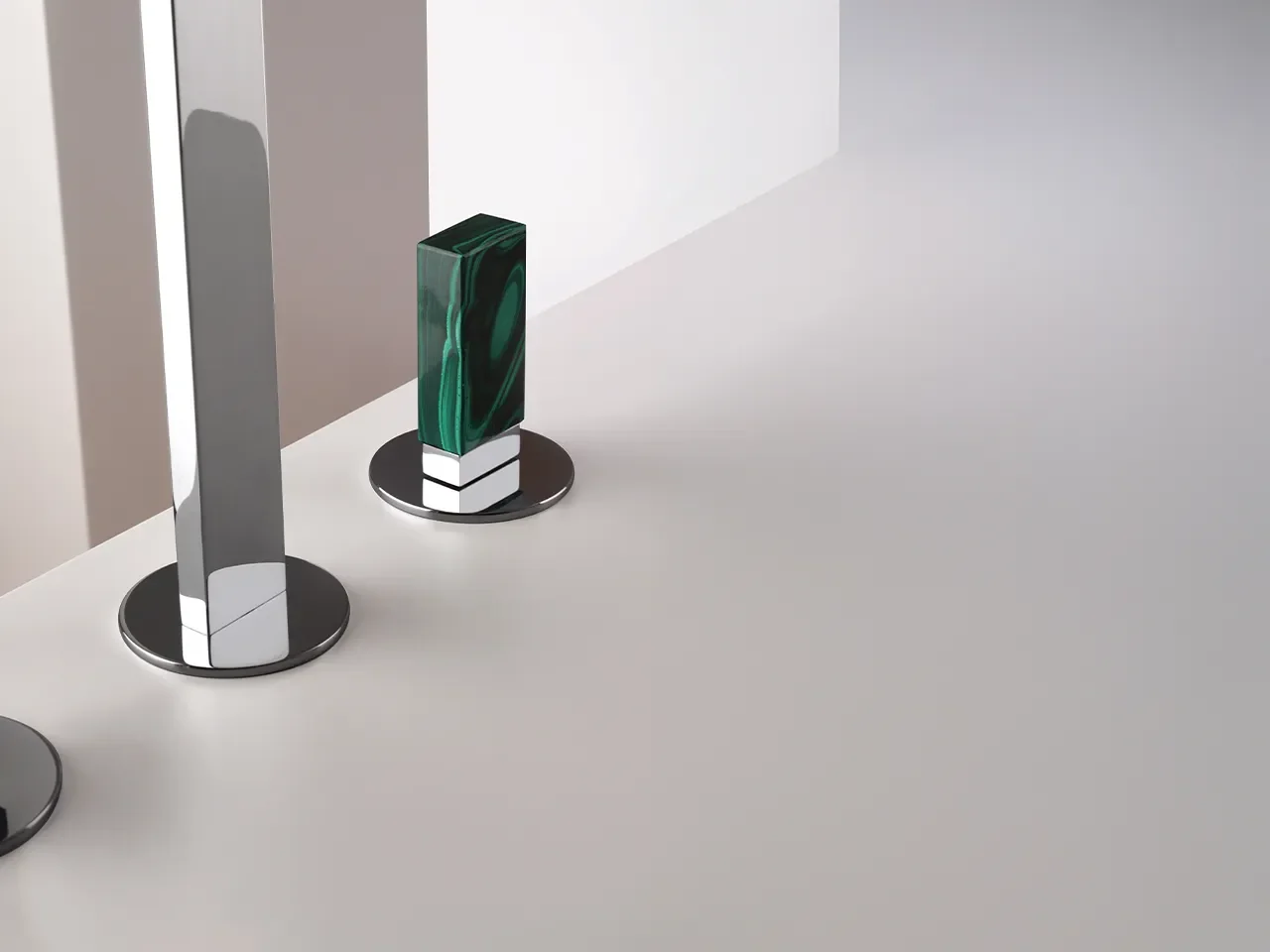
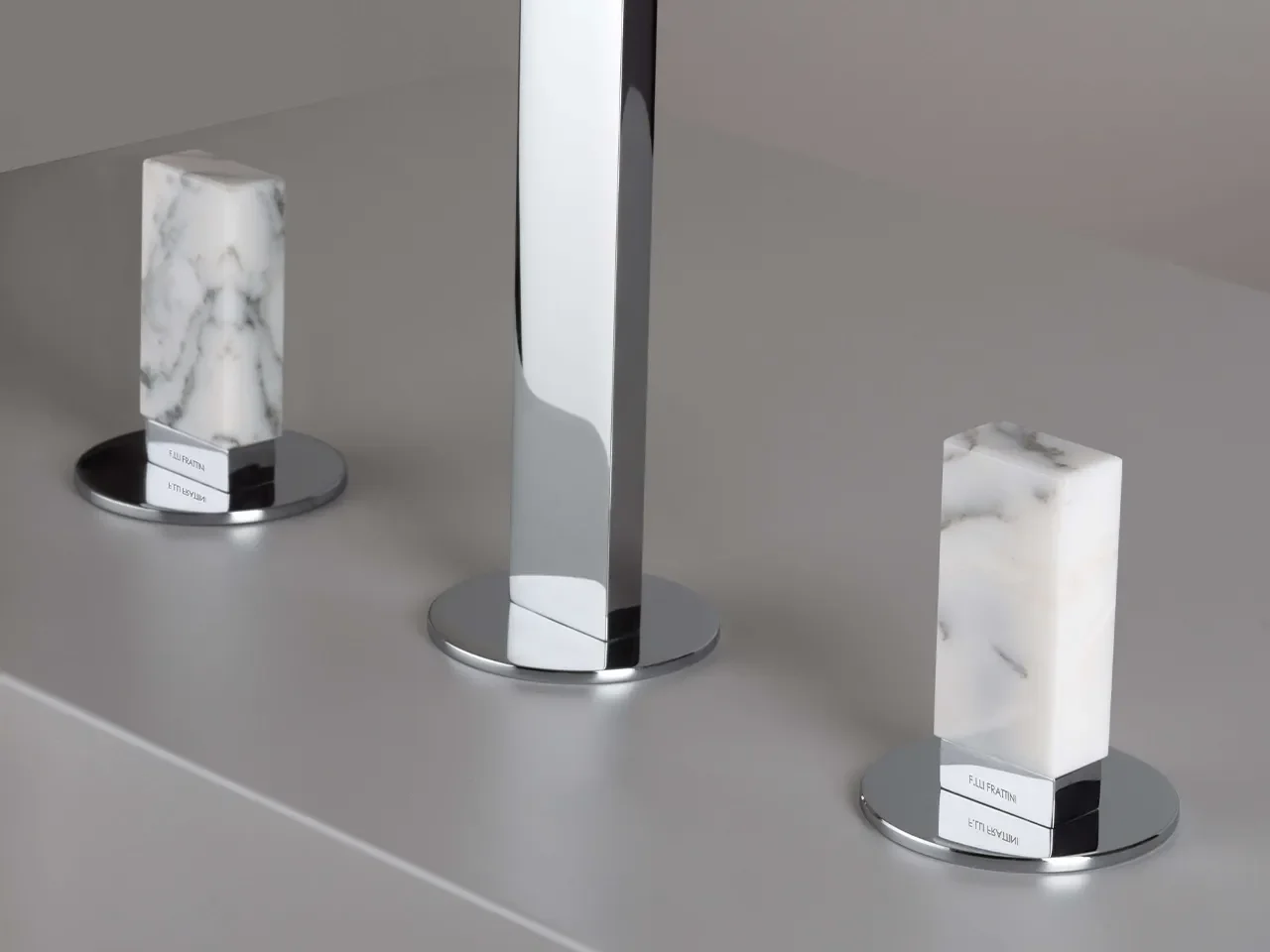
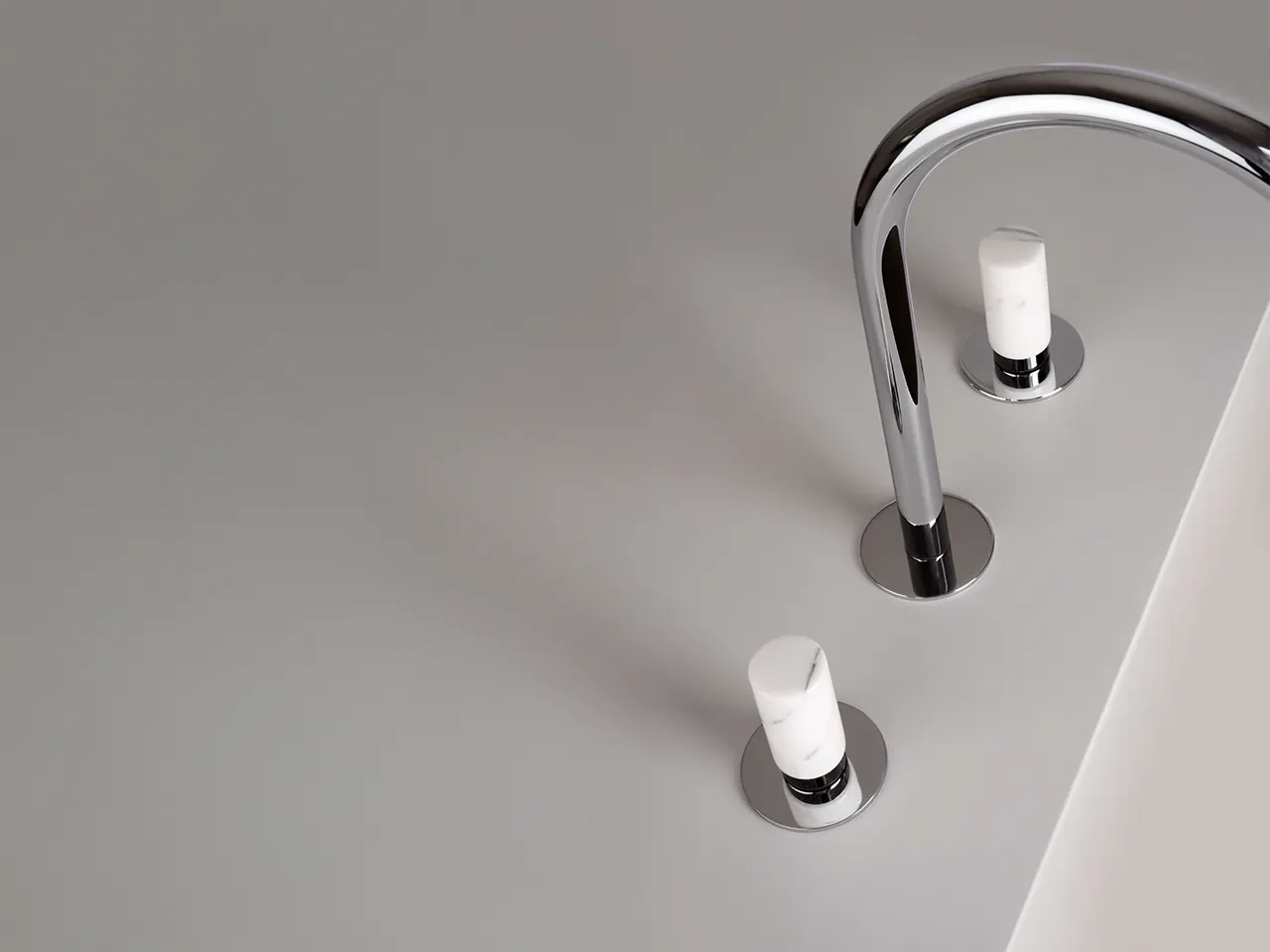
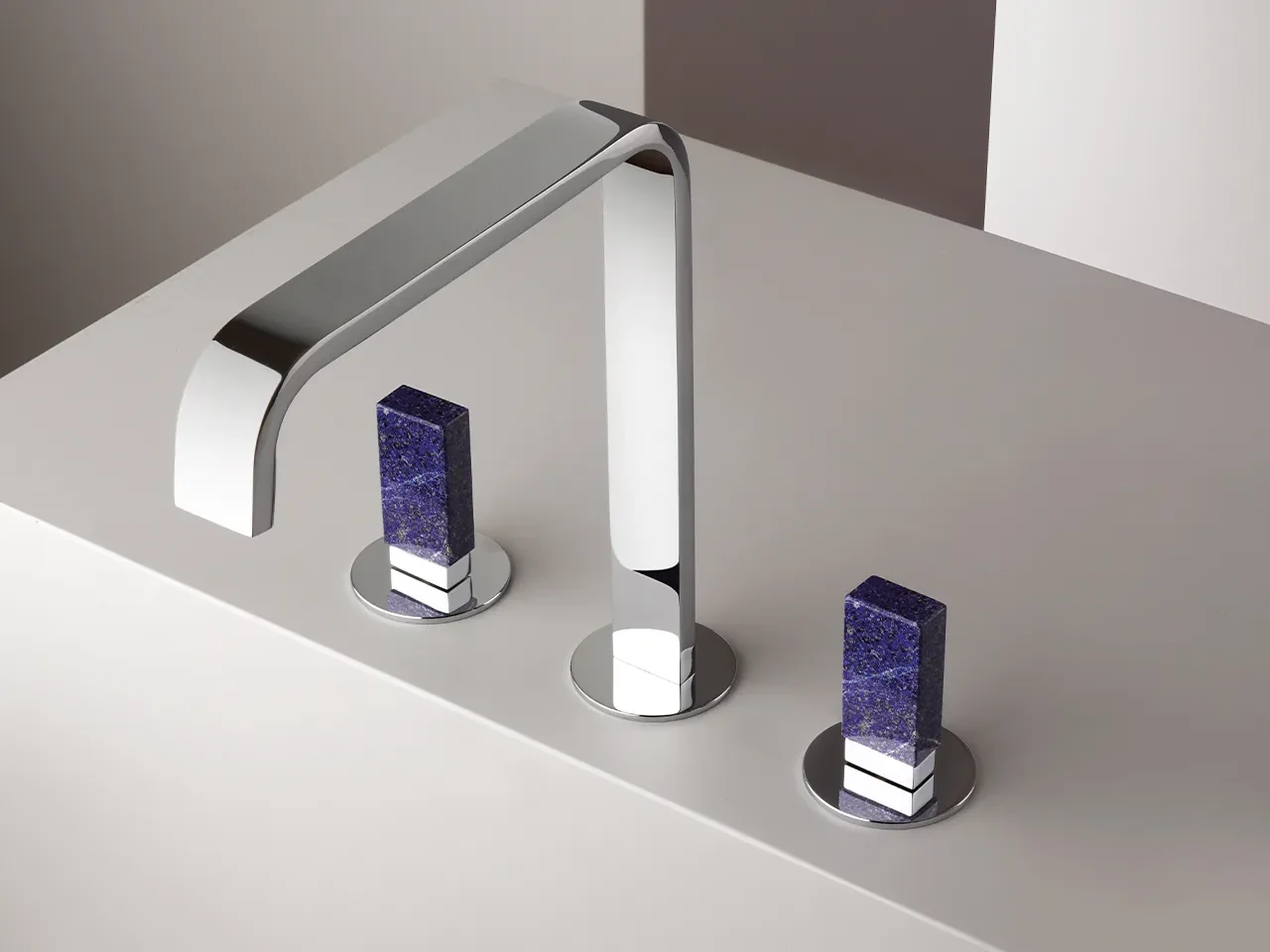
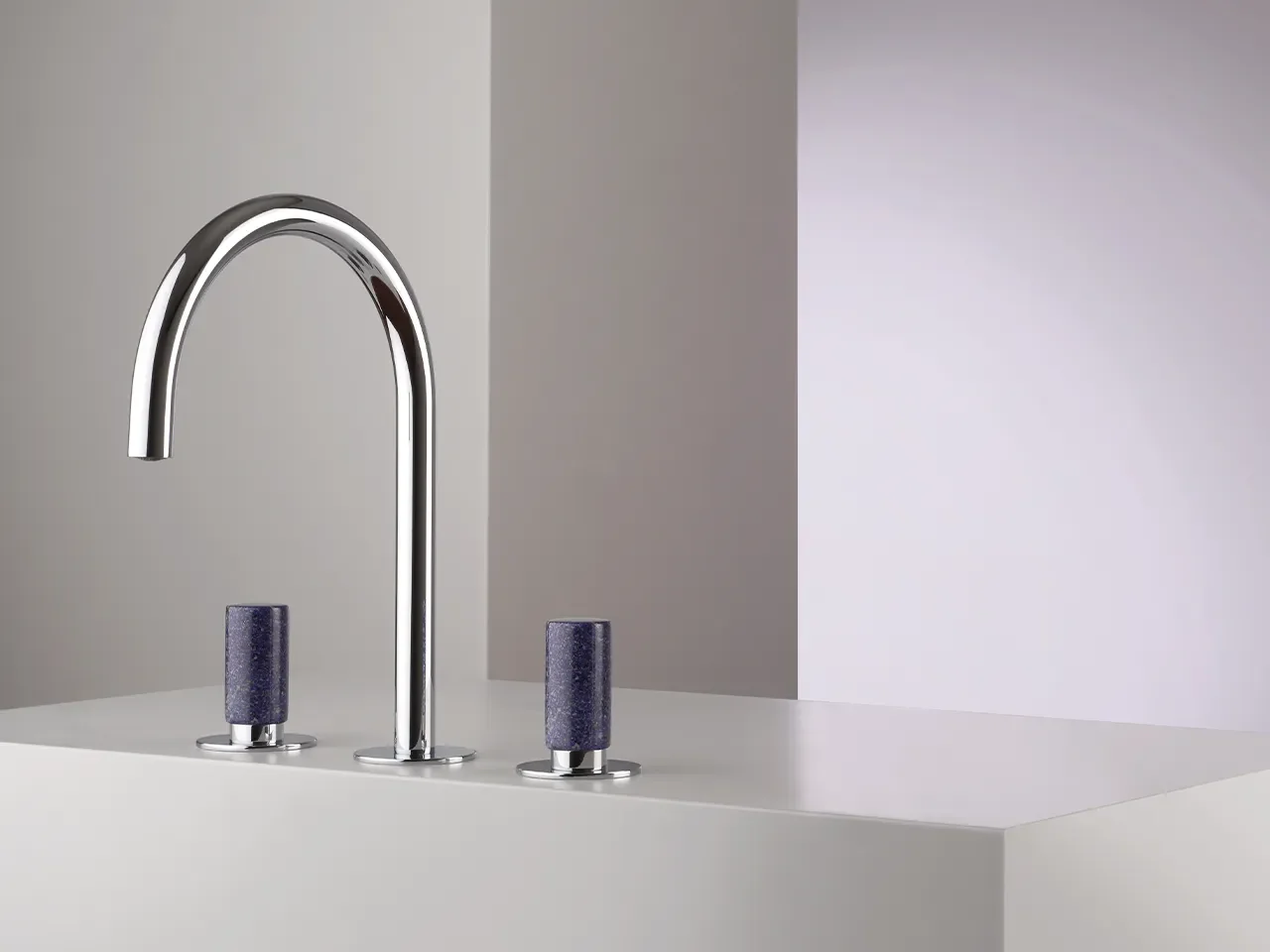
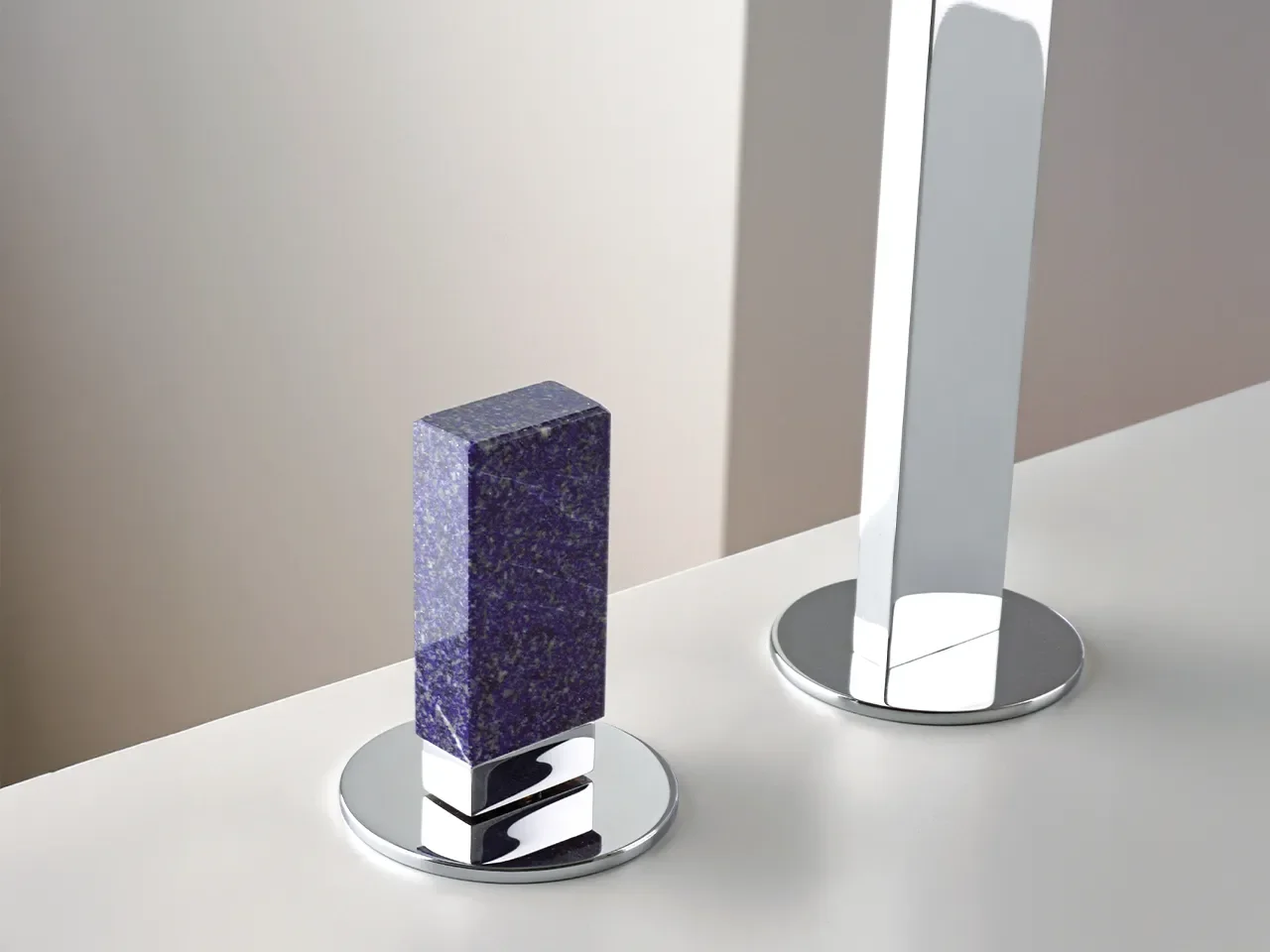
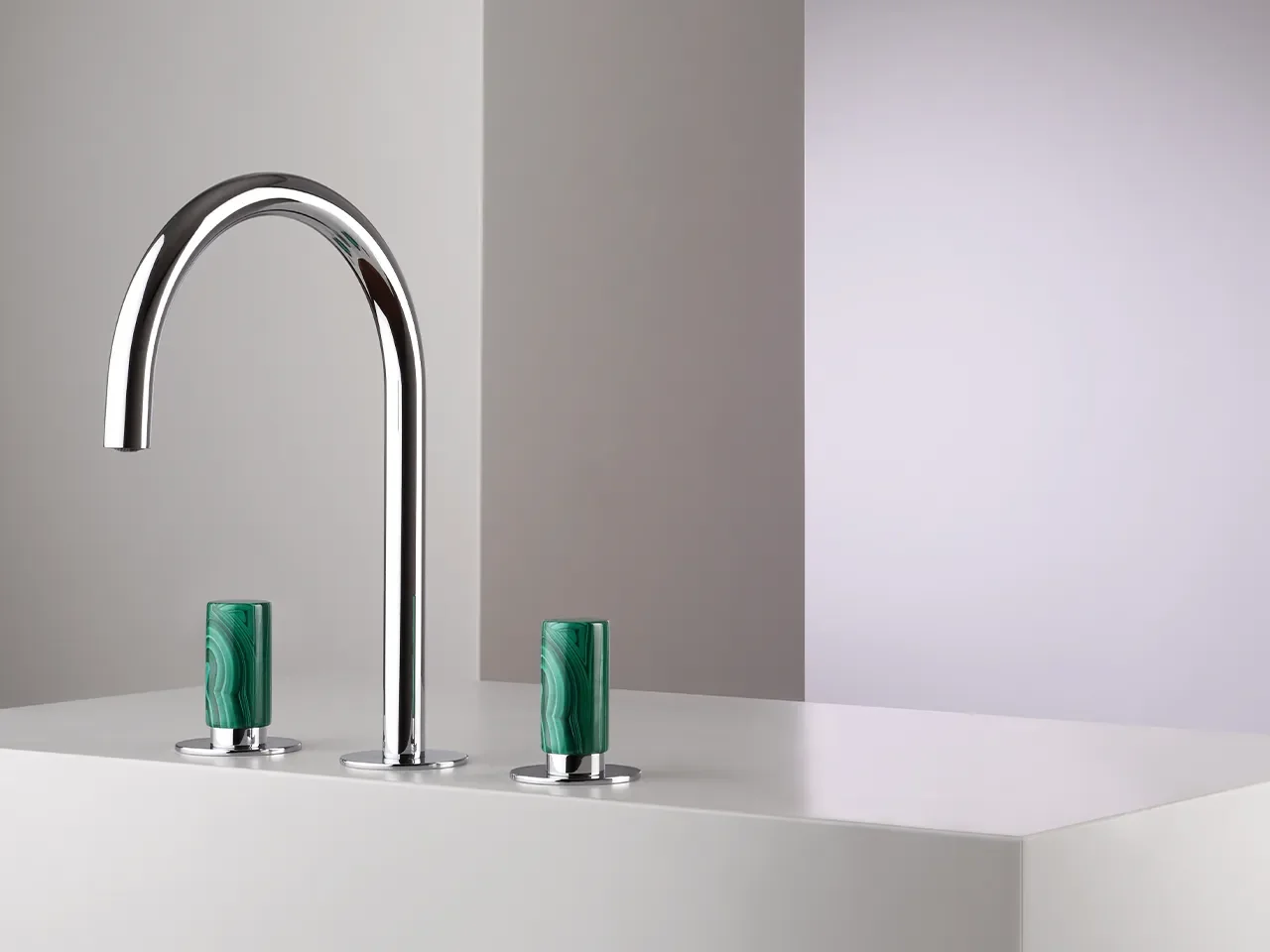
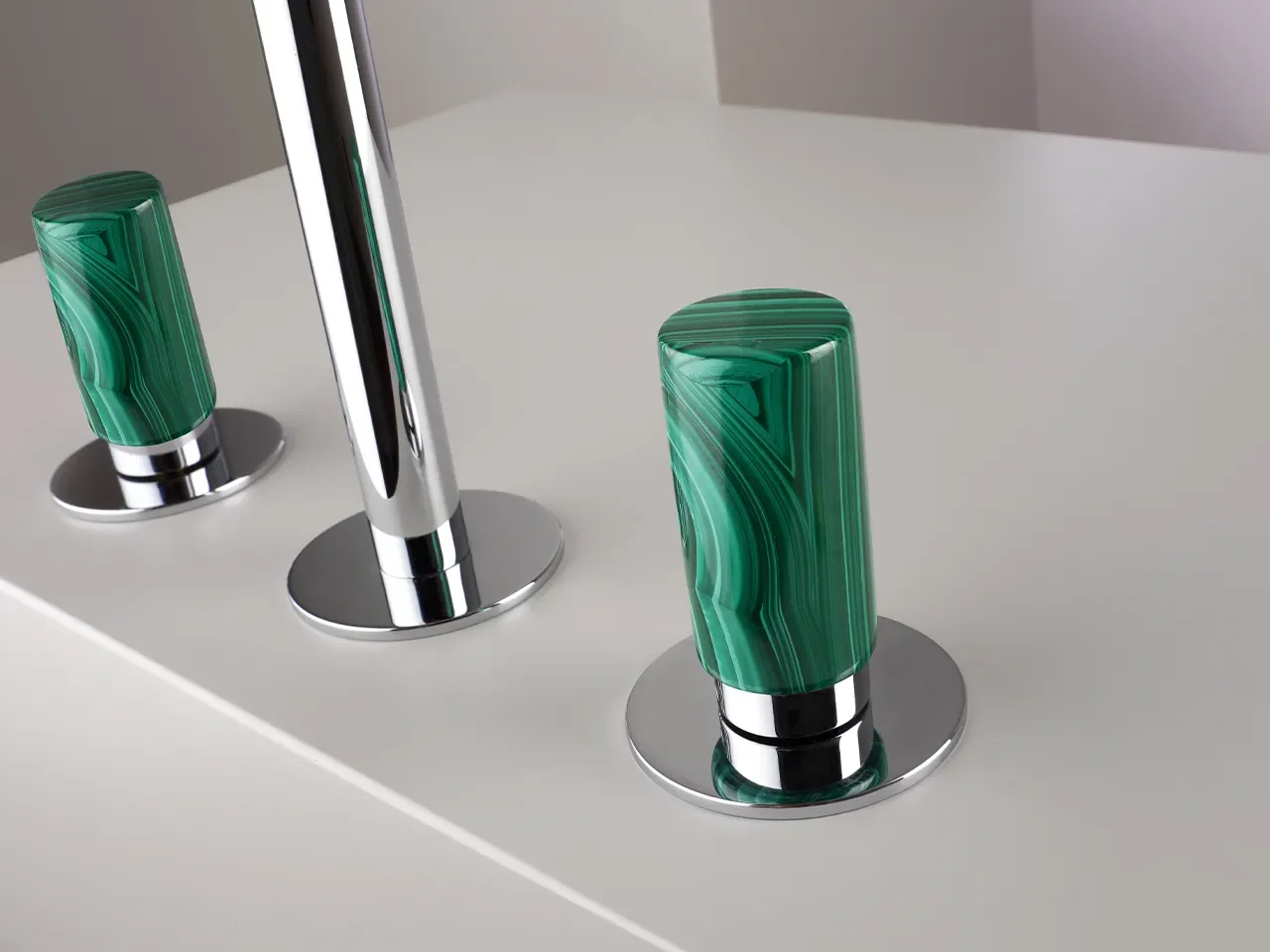
Both collections bear the signature of architect Paolo Bertarelli, an interpreter of design that blends precision and formal sensitivity. Vita M Style, with its rectangular handles, expresses an elegant, geometric character — perfect for those who seek balance and linearity. Pepe M Style, on the other hand, focuses on essentiality and formal rigor, entrusting its cylindrical handles with a sober and contemporary aesthetic. In both series, the design language extends into coordinated versions for washbasin, bidet, and shower — offering designers a cohesive and complete set.
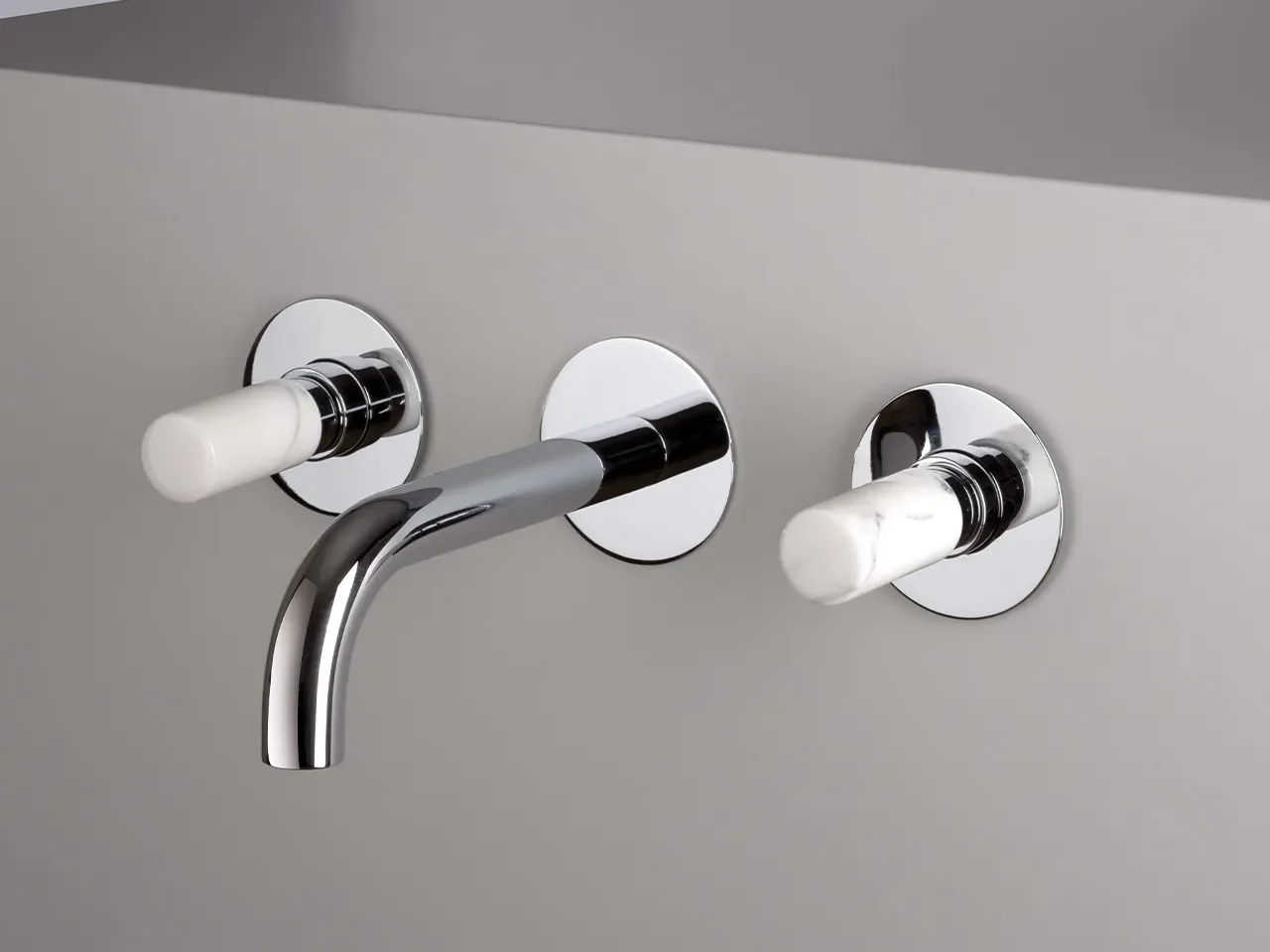
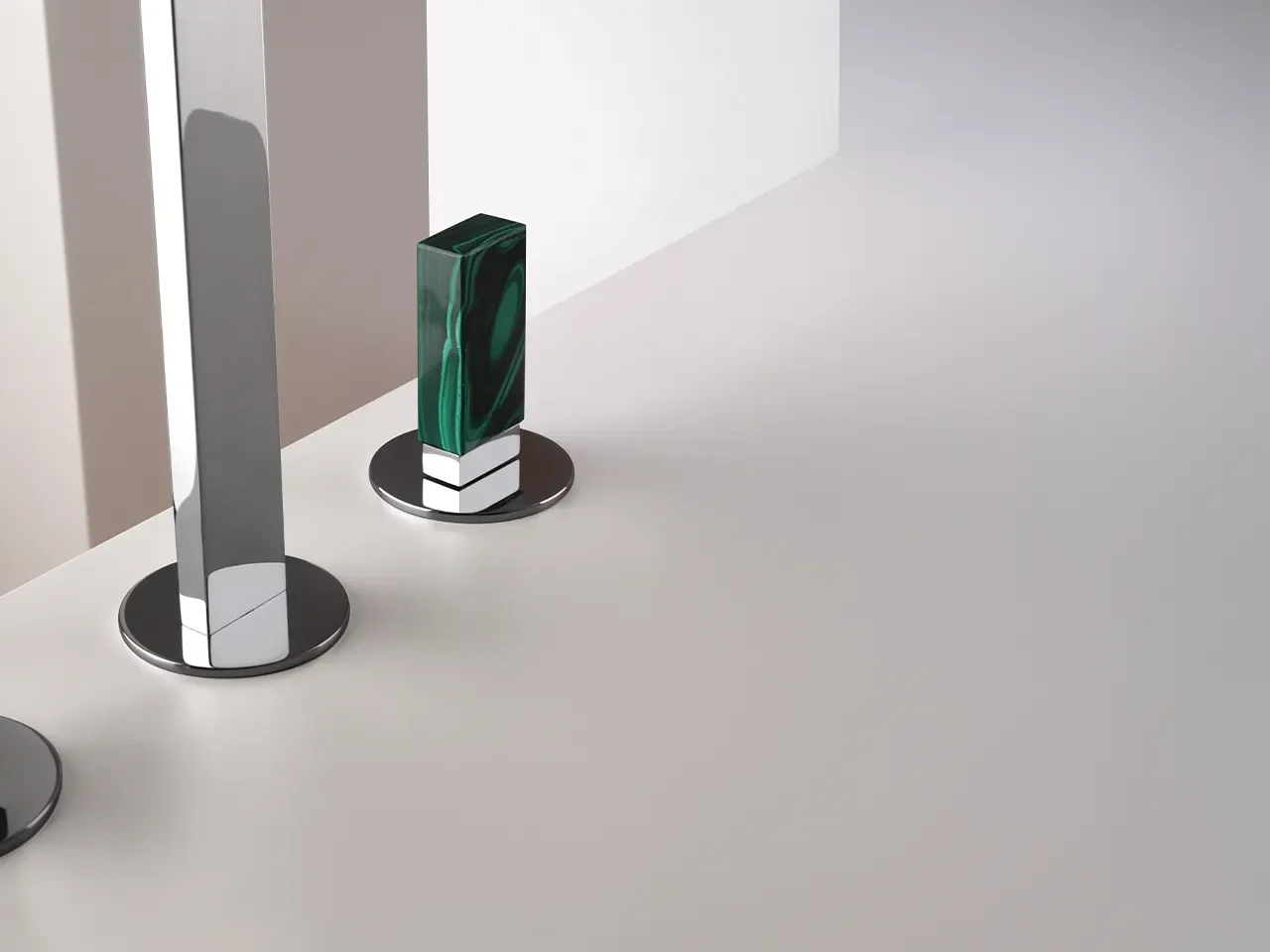
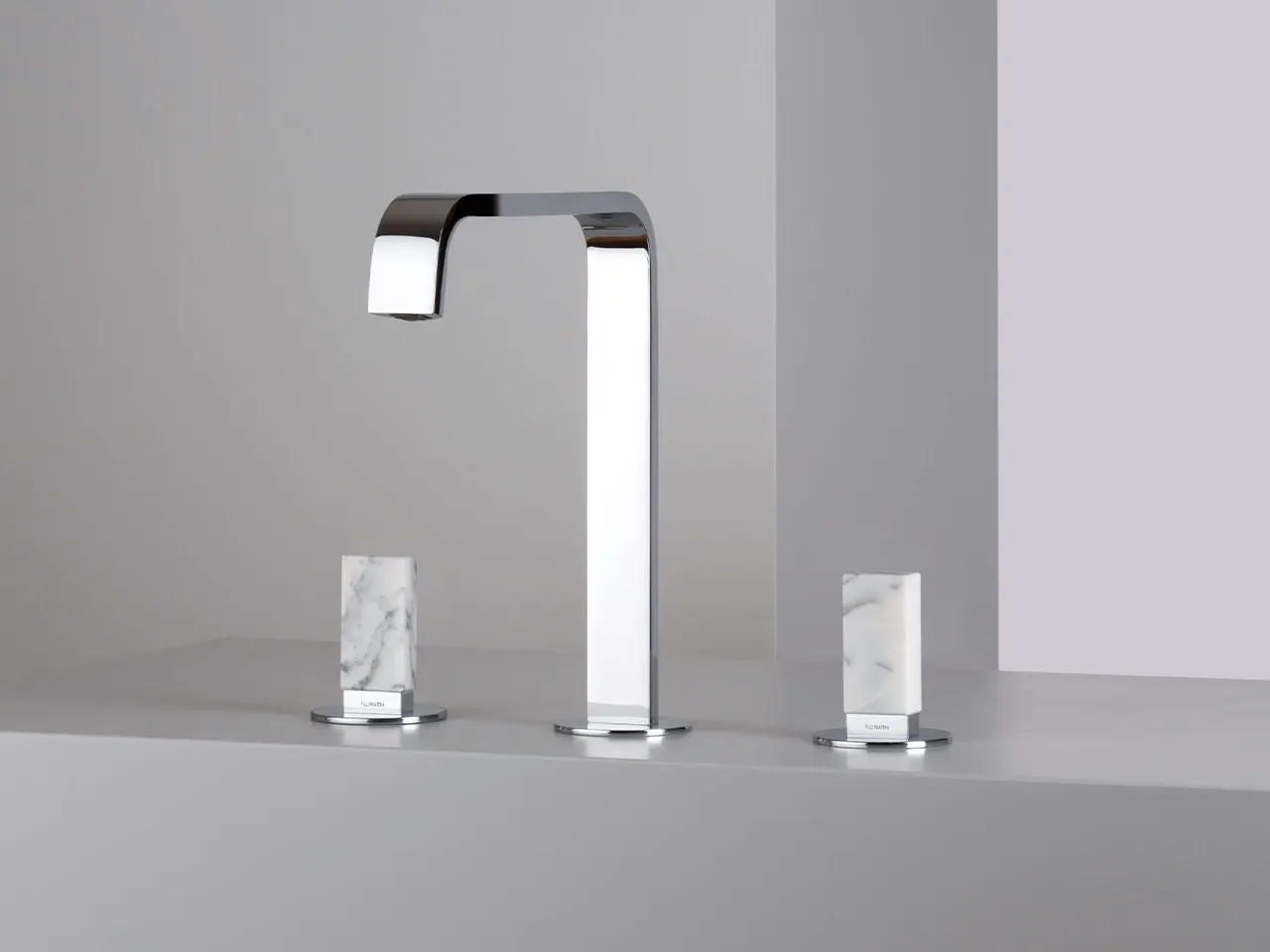
The Geography of Stones
The handles of the Vita M Style and Pepe M Style collections form a small atlas of materials.
• Malachite: Originating from Africa and Europe, its concentric green veins make it instantly recognizable. Loved by Egyptians and Romans alike, it was considered a protective amulet. Its vital energy resonates in contemporary interiors that seek organic and natural accents. Integrating malachite means introducing green details that harmonize with neutral stoneware or concrete finishes, enhancing the material harmony of the bathroom.
• Lapis lazuli: Mined for over 6,000 years in the Badakhshan region of Afghanistan, and also found in Chile, it represents the most evocative blue in history. Used for jewellery, amulets, and pigments — from the ultramarine of Renaissance frescoes to Byzantine icons — it symbolizes depth and spirituality. In bathroom design, it gains strength when combined with white surfaces or light woods, creating refined chromatic contrast.
• Statuary white Carrara marble: One of the noblest materials in Italian tradition, chosen by Michelangelo for the David and the Pietà. Refined, luminous, with delicate veining, it embodies rigor, purity, and continuity with Italy’s artistic heritage. In the bathroom, it amplifies light and enhances minimalist compositions, reinforcing the sense of purity.
• Portoro black marble: Rare and precious, quarried exclusively in Portovenere, it is renowned for the contrast between its deep black background and golden veining. Used since Roman times, it later adorned Baroque churches and aristocratic palaces. Today it is a highly scenic material that adds intensity and theatricality. In contemporary interiors, it becomes a focal point when paired with gold or matt black metals, transforming the bathroom into a space of character.
- The Colours of Stone as the Fil Rouge of Contemporary Bathrooms
- In contemporary interior design, colour becomes a strategy for storytelling and balance. Green, blue, white, and black — the hues of the stones chosen for Vita and Pepe M Style — trace the common thread of a bathroom that speaks the language of harmony.
- Each tone guides material and compositional choices:
- • Malachite green introduces a natural presence that pairs beautifully with neutral stoneware and concrete surfaces.
- • Deep lapis lazuli blue creates refined, immersive atmospheres in dialogue with light woods and luminous finishes.
- • Statuary white enhances brightness and conveys essentiality, combining elegantly with pale stone floors or minimalist resin surfaces.
- • Portoro black, with its golden veins, becomes the focal point of elegant scenes, echoing with metallic details and dark surfaces.
- Integrating faucets with natural stones, wall coverings, and accessories means composing a rational environment in which the handle detail rises to a central design element. Thus, the bathroom becomes a material and chromatic landscape, where every choice contributes to shaping a refined and dense living experience.